
South Africa is about to get its groove on, thanks to a cannabis revolution that’s poised to make some serious mula and give rural communities a leg up in the world. Stoned Citizens of the Rainbow Nation are stoked to be part of the next big thing, with plenty of experts convinced the country is sitting on a goldmine (of weed, OBVIOUSLY).
(more…)Tag: cannabis industry
-

Sign Language Of The Time – Creating An Inclusive Cannabis Industry That Is Accessible To Persons Who Are Deaf
There are more than 70 million deaf people around the world, of which 80% live in developing countries. These individuals communicate using a combination of sign language, lipreading or interpreter applications. The word “deaf” includes all persons who do not have the ability to hear, are hard of hearing (HoH) or have significantly reduced hearing. When deaf individuals identify as “Deaf” with a capitalized D, they identify with Deaf culture and consider themselves part of the Deaf community.

September is Global Deaf Awareness month, the observation is set to remind the hearing community of their responsibility to ensure accessibility for persons who are d/Deaf or HoH. A new day is dawning for stoned citizens the world over with the sporadic legalization of medical and adult-use cannabis. The emerging industry holds countless opportunities for anybody from cultivators and creators, to entrepreneurs and enthusiasts of all kinds. These opportunities come with great responsibility to ensure the industry is inclusive and accessible to persons who communicate using sign language.
Promoting inclusion and accessibility for people with disabilities among employees, suppliers and customers provides a competitive advantage and opens up a wealth of opportunities that did not exist before.
SIGN LANGUAGE
Sign languages are fully developed vocabularies based on a system of hand gestures, their placement relative to the upper body, fingerspelling, body posture and facial expressions. Like any spoken language; sign languages are specific to their country of origin, influenced by popular culture and have distinct dialects and accents.

International Sign Language is a simpler version of sign language. It allows deaf individuals from across the globe to communicate with one other during meetings, when travelling and while socializing.
INTERNATIONAL DAY OF SIGN LANGUAGES
23 September was officially declared to be the International Day of Sign Languages by the United Nations in 2018. The September date was chosen to memorialize the day in 1951 that the World Federation of the Deaf (WFD) was established. The observation aims to raise awareness for deaf persons, the challenges they face in their day-to-day lives and celebrating the linguistic identity and cultural diversity of deaf people and other sign language users.

The theme for International Day of Sign Languages 2021 is “We sign for human rights”, as per the WFD. The motif is set to encourage deaf and hearing people from around the world to work together to promote the right to use sign languages as a primary language in everyday life. Making day-to-day life more accessible for persons with hearing disabilities by acknowledging their human rights.
ISSUE AT HAND
The sporadic uptake in countries that are to some degree legalizing responsible adult-use cannabis is exciting for most. However, the emerging cannabis industry is in danger of leaving behind individuals who are d/Deaf or HoH. Persons with impaired hearing who communicate using sign languages are severely underrepresented within the evolving marijuana market. Most sign languages do not have signs for words like “Endocannabinoid”, “Tetrahydrocannabinoid” or “Decarboxylation” – creating a huge communication and education disparity. A d/Deaf or HoH person will most probably not be able to communicate with a budtender, store assistant or medical professional about cannabis or its medicinal benefits. Leaving them confused, overwhelmed and frustrated, with a list of unanswered questions.

Hearing people, or those who do not communicate using sign language, take for granted the frustration that d/Deaf or HoH people have to endure on a daily basis. Not just in and around the cannabis industry – we all have a responsibility to ensure our business realms are inclusive enough to accommodate people with all kinds of accessibility requirements.
HELPING HAND
The systematic legalization of cannabis opens the door for government-funded initiatives to ensure sign languages are developed to include words and phrases from developing industries. Creating a comprehensive glossary of terms in sign language to remove communication barriers.

It remains our responsibility to create a more inclusive marketplace, from offering staff sensitivity training in assisting d/Deaf or HoH people to requiring employees to learn fundamental sign language to facilitate a basic conversation. Employers within the cannabis industry should strongly consider employing d/Deaf or HOH individuals. A hearing-impaired staff member will bridge the communication gap for others who communicate using sign language, educate their work colleagues and ensure accessibility standards are upheld.
An accessible experience is sure to boost the return on investment, enhanced reputation within the disabled community and improve overall customer service. This will also increase opportunities and resources for d/Deaf or HoH individuals, facilitate cultural inclusion and demand participation in decision making.

DEAFinition is a South African non-profit organisation that provides a list of services and funding opportunities to promote equal access for the d/Deaf or HoH community. Their services include expert advice and guidance on deaf recruitment, workplace experience and skills training. The non-profit recently launched a free mobile application to bridge the communication gap between deaf and hearing people as well as promote learning South African Sign Language as an additional language.
-
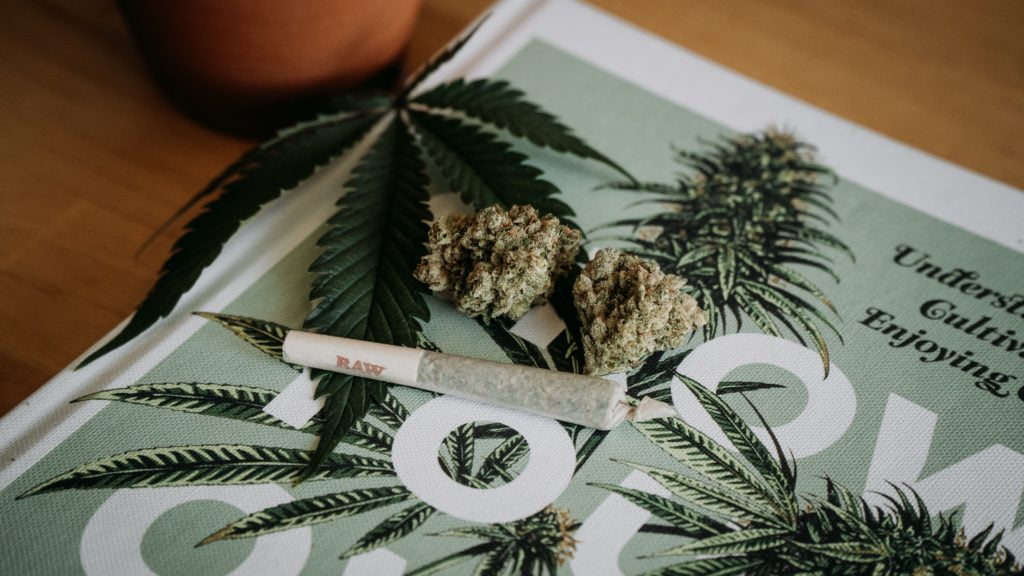
Study Shows How COVID-19 Fuelled The Homegrown Cannabis Boom
Many years ago most of the UK’s cannabis supply was imported from places such as Morocco and Lebanon. This is no longer the case, as many organised criminal gangs set up growing operations closer to home. The Independent Drug Monitoring Unit estimated that by 2012, 80% of the cannabis used in the UK was homegrown – up from 30% in the late 1990s. It is most likely well over 90% now.
In recent years, the marijuana industry has undergone another major shift. Small-scale growers are popping up all over the show, mainly supplying themselves and their buddies. This has become possible for several reasons, including improvements to growing technology, new strains more suited to indoor growing, and the wealth of information and expertise on the internet. The homegrown trend took itself to new heights during the COVID-19 lockdown and many stoned citizens no longer depend on drug dealers for a fix.
Keeping Up With Cannabis
To monitor the growth of home cultivation and how cannabis markets were evolving, a bunch of clever stoners formed the Global Cannabis Cultivation Research Consortium in 2009. In 2012, they surveyed growers in Australia, Austria, Belgium, Canada, Denmark, Finland, Germany, the Netherlands, Switzerland, the UK and the US to find out more about small-scale growing, and how and why these people got involved. Most turned out to be regular citizens – with normal jobs, normal family arrangements, and no more involvement in drug dealing or other crime than any other section of the public.

In 2020, the scientists launched their second international survey to see how cultivation was being affected by legalization and policies. This time, they focused on 18 countries, adding France, Georgia, Israel, Italy, New Zealand, Portugal and Uruguay to the original 11, while also running a survey for people in non-participating countries. A global pandemic and national lockdowns had not been part of their planning, but the nerds added questions to find out what effects COVID-19 have on the cannabis industry.
The Findings
With people being forced to spend more time at home, social interactions have been limited, including opportunities to take drugs with friends or to obtain them from the usual sources. Meanwhile, national and international drug supply networks have been disrupted.
The study’s preliminary findings suggest that COVID-19 has affected domestic cannabis cultivation around the world. With nearly 5,000 participants at the time of writing, 16% report only becoming involved in cannabis growing since the pandemic. There are 11% of respondents saying that having more time at home was why they were growing, while 8% cite increased cannabis prices during the pandemic as a motivating factor.

More than one-third of respondents reported that it was harder to meet up in person with people they grew with, or to obtain cannabis through personal social networks or their usual dealer. Yet fewer than one in ten reported that it was harder to get hold of cannabis seeds, growing equipment, or other supplies like fertilisers.
Besides the pandemic, most home growers across the world pointed to other motivations that were in line with our 2012 findings: wanting a product that is healthier and cheaper, while avoiding contact with criminals.
Three-quarters of respondents report that they grow cannabis because they get pleasure from doing so. Nearly half report that they are growing for their own medical use. And while 15% report growing to supply others with cannabis for medical use and 15% supply others for recreational use, our growers are not acting as drug dealers: only 4% reported selling cannabis for profit.
In conclusion, the researchers stressed that these are only preliminary findings. They want to double the number of respondents to at least 10,000 in the coming months, and will publish the final results early in 2022. They do however predict that the growth of home-grown cannabis will see a bigger spike. Once people get the habit of growing their own, there is little reason to go back to buying from dealers. We are willing to bet on it!