Tag: Cannabis Plant

  • Cannabis Plant Anatomy – Up Close And Personal With Marijuana

    Cannabis Plant Anatomy – Up Close And Personal With Marijuana

    With a huge shift in the legalization of marijuana globally, we have seen the reefer receiving much-needed attention in recent years. With its slow pace legalization around the world scientists and Cannabisseurs alike have had their hand at developing products. Scientists are conducting research into exactly what cannabis is, what compounds it is made up of and how it affects different parts of our bodies. We investigate the anatomy of the cannabis plant.

    As we become ever more conscious about the environment and our impact on the well being of mother earth, we must understand marijuana, the plant’s anatomy and how to best benefit from the Holy Herb.

    The Anatomy of the Marijuana Plant, because there is more to it than to ‘pick out the seeds and stems’ as Afroman so blazingly riffs in Colt 45.

    Cannabis plants are dioecious, meaning the male and female reproductive structures are in separate plants. Male plants produce pollen which fertilizes female flowers. Female plants carry the flowers which we smoke. The male counterparts have very few cannabinoids and are often removed to avoid them pollinating the female plants. Which would result in a smaller yield of not-so-dope dagga, due to the development of the seeds. Marijuana can be hermaphroditic, meaning it has both male and female reproductive structures. These plants are also not ideal when cultivating chronic, as they self-pollinate.  

    Cannabis Plant Grow-Op

    ROOT

    The root system is long and fibrous and is made up of a taproot and branching lateral roots. The roots are an essential part of the plant as it absorbs water which assists with transporting nutrients to the rest of the plant as well as storing excess nutrients for later use. Cannabis root has been used throughout history, it can be dried and powdered and is known to be high in alkaloids which can reduce fever, dysentery, gastric complaints as well as improve general health and well-being.

    Cannabis Plant Roots

    SEED

    Where it all begins, the seeds carry the genetic information from the two parent plants. The cannabis seed is a tiny plant embryo that will germinate once it is exposed to the right amount of moisture (water) and temperature (sunlight).

    STEM

    Other than offering the major structural support for the plant. The stem is also part of the main transportation system for nutrients and water. Very similar to a vascular system of tubes connecting the roots to the stalks and leaves.

    LEAF

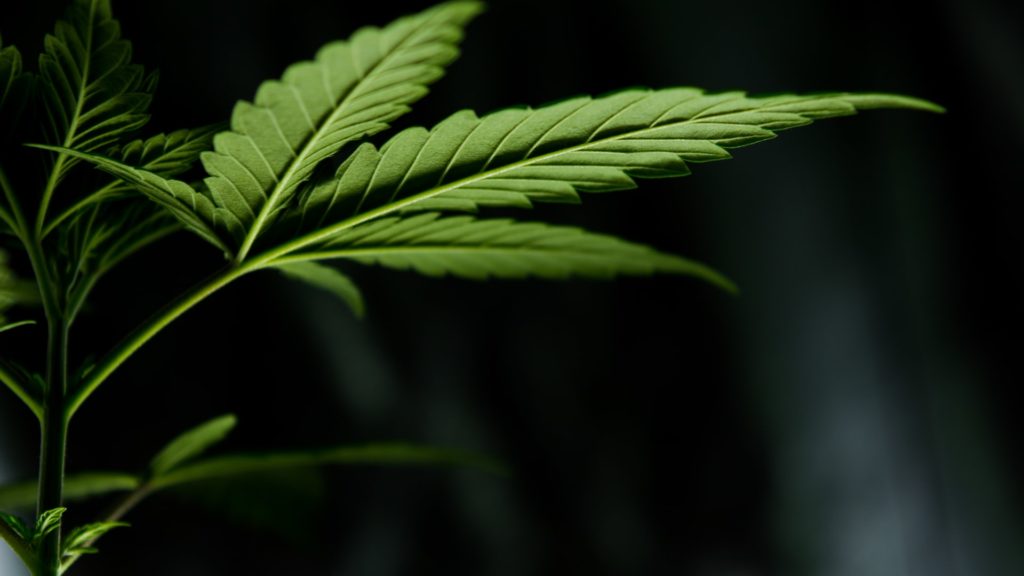
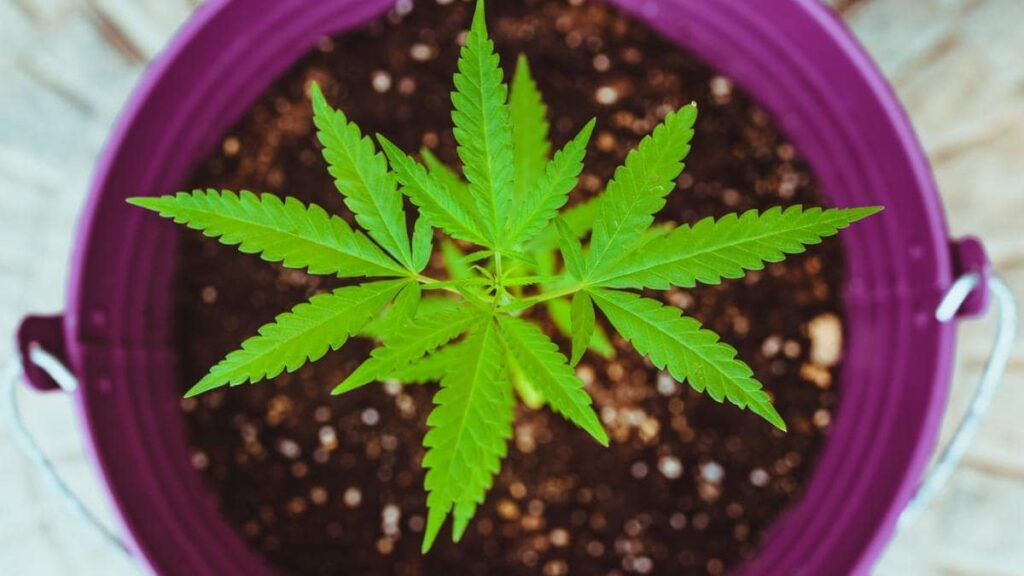
    One of the most iconic stoner symbols to date is the open hand-shaped leaves that have five, seven, nine or more serrated leaflets. The leaves use the process of photosynthesis to absorb carbon dioxide, water and the sun’s rays. This is then converted into oxygen and sugars; imperative as a source of energy to sustain the plant’s growth. The fan leaves shade the delicate buds and protects them from sunburn.

    Marijuana Leaf

    From here, we will look at ganja’s gender distinction;

    FLOWER

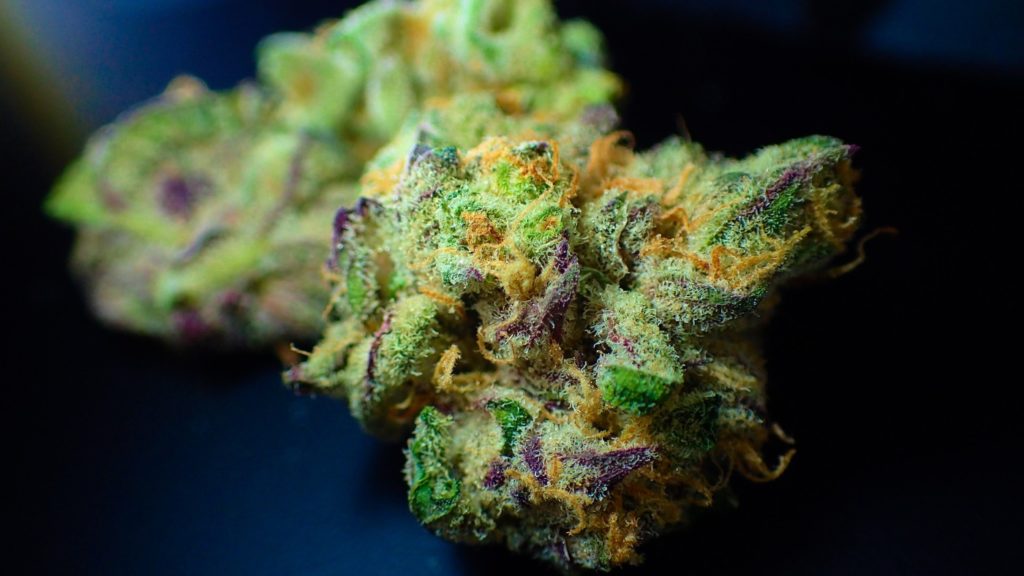
    Before the flowers open, their shape determines the sex of the plant. If the unopened bud is shaped and coloured like a small yellow or green banana, the plant is male and won’t flower. Whereas the female’s unopened bud resembles a teardrop. Once the unfertilized female plants are matured the flowers consist of trichomes, pistilles and stamen.
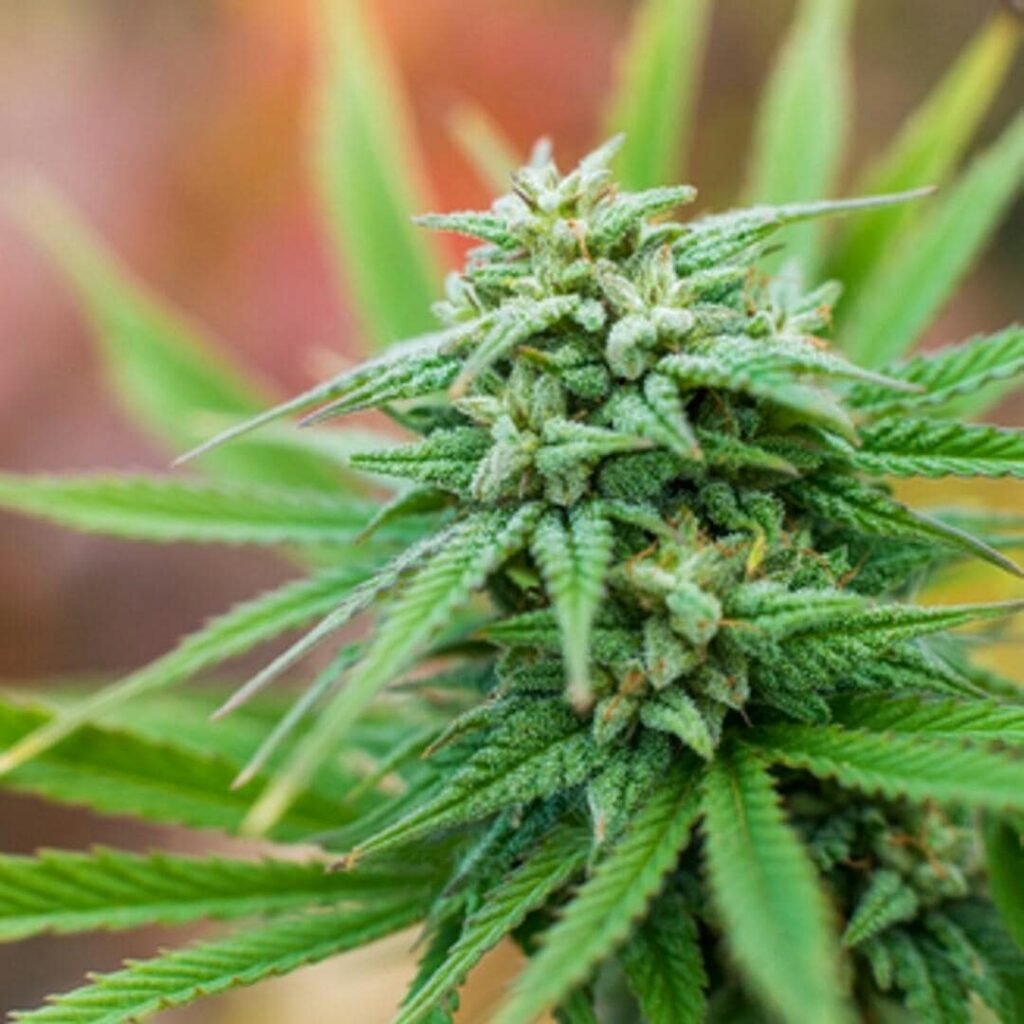
    Marijuana Flower

    TRICHOMES

    These mushroom-shaped glands take up the surface of the flowers (as well as the smaller leaves known as Sugar Leaves). The trichomes are responsible for secreting a resin that acts as a natural defence against disease and infection. They also offer protection from excessive heat and deters pests. The resin contains the highest amount of cannabinoids, like THC and CBD. Trichomes also produce and secrete terpenes, which gives spliff a seductive smell and tantalizing taste.

    Cannabis Flower Trichomes

    PISTILLES

    These are the female reproductive structure, it resembles tiny hairs which point in all different directions, searching the surrounding atmosphere for pollen. The pistils change colour throughout the maturation process of the cannabis plant, they start white and turn orange, brown and even red.

    STAMEN

    Pollen sacks make up the male reproductive structure. In hermaphroditic plants, both pistils and stamen are present. If you are not looking at collecting a bunch of seeds, for whatever reason. Ensure to weed out the menacing male plants along with the intersex ones.

    Cannabis Flowers In basket

    I hope this breakdown proves useful in gaining a basic understanding of the anatomy of the cannabis plant. Marijuana research is still in its infancy, small discoveries lead to bigger and better ones. Stick around Herbalists, sharing is caring and at Stoned Citizen we love sharing nugs of knowledge to educate, empower and enlighten lettuceheads alike!

  • Why CBG, A New And Legal Cannabis Plant Product, Is All The Rage

    Why CBG, A New And Legal Cannabis Plant Product, Is All The Rage

    Unfamiliar with CBG? So are we, yet it is suddenly everywhere like CBD, packaged in oils, tinctures, capsules, gum, and in whole-plant flower.

    What is CBG and does the Cannabigerol live up to its expectations? That all depends on who you are asking. At first, stoned citizens who keen to experiment and explore the marijuana plant were told cannabis had one active ingredient, THC. Then came wellness influencers and celebrities like Gwyneth Paltrow from GOOP, telling you all about the magic of CBD. Their message was clear: CBD is good and THC is bad. despite very little evidence of CBD’s power and THC’s demonstrated potential in pain relief and appetite stimulation.

    Where does CBG fit in?

    CBG is more untested. Unlike THC, which is banned by federal law and heavily regulated by states, and unlike CBD, which is increasingly policed by the Food and Drug Administration, there are no rules around CBG yet. Because of this, there is growing interest in the commercial use of this unregulated phytocannabinoid.

    CBG isn’t new to science, but the new market hype underscores the scientific ignorance. Cannabigerol (CBG) is currently being marketed as a dietary supplement and many claims are being made about its benefits.

    Harvested cannabis plants generally offer 1 % CBG content by weight, which begs questions as to how cannabis companies are harvesting enough of it or breeding plants differently to market products boasting of 20 % CBG.

    The knowledge gap and scarcity haven’t stopped entrepreneurs from searching for the next economic market, and it appears CBG oil may prove to be that market, according to an expert in cannabinoids.

    There is significant potential for very specific pathologies—and that’s how the cannabinoid will be marketed, regardless of concrete results.

    Great potential, little actual knowledge, and immense hype: that’s the cannabis industry, and that’s the current bottom line with CBG.

  • Why All Stoners Worth Their Bud Should Know What Sinsemilla Mean

    Why All Stoners Worth Their Bud Should Know What Sinsemilla Mean

    If you are into cannabis cultivation and an avid grower of ganja, we bet you know what Sinsemilla means. For those out-of-the-know, it’s high time to read on and find out what the word means.

     Sinsemilla comes from the Spanish words sin (without) and semilla (seed), translating literally to “without seeds”. Some might argue that Sinsemilla refers to a specific strain, subtype, or geographic location, but they would be wrong.

    The word is simply used to describe seedless cannabis flowers that come from unfertilised female plants.

    Those who’ve smoked some epic bud before will know that weed without seeds is dope AF. Seedless marjijuana is more potent, tastes better, and is simply of overall higher quality. Any podhead worth his spliff will be quick to tune you that weed with tons of seeds are of poor quality.

    Why does shitty weed have seeds in it?

    All marijuana that you buy or grow will have seeds. Weed with a bunch of seeds is called ‘stress weed’. It’s highly likely that the plant was exposed to nasty elements that interfered with its growing process.

    When a plant becomes stressed, it thinks it is gonna die. Believing it’s at death’s door, the plant starts producing male flowers and pollinates itself.

    It certainly gives a whole new meaning to the phrase “go f$ck yourself” because that is literally what the plant is doing. Once this happens, your THC production goes down the drain. The cannabis flowers stop producing resin and start producing seeds.

    Long story short, if you find weed with a single seed, keep it safe until you find the time to germinate, grow and nurture it into the dopest pot plant you will ever smoke.

  • Compost Tea: DIY Pot Plant Parenting

    Compost Tea: DIY Pot Plant Parenting

    Step aside artificial fertilizers and nutrients, we are going organic! Compost tea is a nutrient-rich, well-balanced organic supplement made by steeping aged compost in unchlorinated water. Feeding your cannabis plant the best possible compost tea will boost growth and fend off any unwanted pests.

    Known amongst those with the greenest fingers as liquid gold fertilizer, compost tea is a liquid fertilizer used for all kinds of flowers, vegetables and plants. The bio-diverse brew is an easily absorbed liquid full of nutrients, bacteria, fungi, protozoa and predatory nematodes. Protozoa are free-living or parasitic single-celled eukaryotes that feed off organic tissue and debris. The nematodes, on the other hand, take care of the slow-moving soft-bodied insect but won’t affect your plant or earthworm friends.

    Compost is a soil conditioner rich in nutrients and microscopic organisms. It is the result of the slow degeneration of natural waste materials like fruits, vegetables, eggshells, paper and garden trimmings. Choose a well-matured finished compost, resembling the texture of cornmeal with a healthy smell of rich forest floor. 

    Garden spade shoveling dirt into a bucket
    Credit @MarkusSpiske

    Why compost tea?

    1. Use as a foliage spray and a root-drench that will not damage roots 
    2. Packed full of easy to absorb nutrients and minerals to boost bigger blooms
    3. Live microbes enhance the soil web and strengthens the plant’s immune system
    4. One alternative replaces chemical-based fertilizer, pesticide and fungicide saving you money

    Make your own compost tea at home by following the basic guide below. The prepared tea will be good for three days, before the microorganism run out of food and start deteriorating.

    You will need a set of buckets, a basic fish tank pump with an aerator, a cheesecloth to strain the solids from the tea and of course the best-finished compost you can get your hands on;

    STEP 1

    Fill a bucket one-third of the way with compost and top it with unchlorinated water, leave enough space at the top of the bucket to avoid messing when you get in there to give it a good old stir

    STEP 2

    Attach the aerator to the pump and drop it in the bucket. Best ensure the pump is not in any direct splash-zones to avoid getting a shock

    STEP 3

    Feed the beneficial soil bacteria by adding 30-grams of organic molasses for every ten litres of tea

    STEP 4

    Occasional stir your bubbling brew over the next 48 hours

    STEP 5 

    Strain the tea into a second bucket through cheesecloth. You can work the solids into the compost heap or plant beds

    STEP 6

    Use the compost tea as a bi-weekly root drench and early evening foliage spray

    DIY foliage spray being applied to cannabis plant
    Credit @Zamnesia

    Foliage Spray

    Add one millilitre of vegetable oil to every litre of tea, give it a good shake and spray it directly onto plant leaves and flowers. The oil will help the liquid stick to the surface of your plant, but can also cause leaf burn if applied during the heat of the day. 

    Make sure you are looking after your plant on a microscopic level with an organic,  home-made, well-formulated and bio-diverse liquid fertilizer.

    Flower girl smoking bong
    Credit @Crav
  • A look into the life of a pot plant parent

    A look into the life of a pot plant parent

    Growing your own reefer will not just save you money, you will be smoking organic flowers giving back all of the love that you poured into them. This article by no means covers nearly enough to guarantee success at any level of growth, it is purely meant to outline the process from seed to smoke. There are many different ways to grow, harvest, dry, trim and cure marijuana. This basic guide will give you a glimpse into the life of an outdoor pot plant parent.

    Choosing the right seeds

    Spliff seeds are endospermic, confirming the presence of an endosperm which acts in feeding the seed to speed up germination. In just a few days the plant emerges from the soil looking like a fully formed plant. There are a few variables to consider before choosing the right strain. There are three cannabis species; Sativa, Indica and Ruderalis; each with distinguishable differences. Sativa and Indica plants are photoperiod flowering and require strict control over most variables from start to finish. Ruderalis plants are easy to grow, auto-flowering and will be ready to consume quicker that the Sativa or Indica cousins. There are hundreds of thousands of ‘sub’ strains, made up of landraces and hybrid plants. Breeders are coming up with new hybrids all the time! The first step to becoming a pot plant parent is to acknowledge the commitment ahead in raising your pot plant!

    Shop around online for seeds with your preferred THC and CBD breakdown. Investigate the reviews on the products and check the preferred growing conditions for each strain to ensure you can deliver the water, sunshine and nutrients to ensure a happy plant. Ensure the seeds you choose are feminized or auto-flowering to avoid male plants who will pollinate the female ones and turn your flowers to seeds. Intersex plants are self-pollinating and should be avoided as well. Seeds are fairly durable; they have been known to germinate up to five years later when kept in a cool dry environment, and as long as ten years if sealed and frozen.

    Pot Plant Parent Calendar for Southern Hemisphere
    Pot Plant Parent Calander

    Germination

    (15 Jul – 30 Sep)
    Pot plants love warmer climates, the temperature should never dip below 10 C, however, they grow ideally between 20 and 27 C. To germinate your seeds, place them in a glass jar with filtered water for 36 hours; then place the seeds on a paper towel and put it inside a ziplock bag, wet the paper towel and seal the bag creating a greenhouse effect. The bag should be soaking up as much sun as possible at this point. Keep an eye on the taproots, when they measure 2cm they are ready to be planted into prepared jiffy pellets.

    Close up shot of a cannabis plant germinating from loose soil
    Credit @GardeningKnowHow

    Potting

    (15 Aug – 15 Nov)
    The next step is to plant the jiffy pellets into your chosen soil. We recommend fabric pots because they are lightweight, allows the root system to breath, promotes rapid growth and prevents overwatering. The size of the pot will determine how much your plant will grow, an eight-litre pot will allow your plant to grow up to 90cm tall and yield 60 – 120g of smokable green. Pot plant parent goals!

    There are several growing mediums to choose from, we suggest using a formulated topsoil that is light with an airy texture like perlite or coco coir (coconut husk), is balanced in nutrients and has the bacteria and fungi needed for optimum plant growth. Avoid using synthetic additives and salt-based nutrients. Create a nutrient reservoir by filling the first quarter of the pot with super nutrient-rich soil and fill the rest of the pot with topsoil. 

    Here are four ways to look after and feed your soil while your plant baby is growing

    1. Feed the top layer of your soil with earthworm castings every few weeks, they are nutrient-dense and assist with drainage and water retention. 
    2. Reinvigorate your soil and boost the carbohydrate nutrients, by mixing 5ml of organic molasses with one litre of water to rinse through the soil every six to eight weeks. 
    3. Boost the living soil web and get micronutrients in the soil with a homemade compost tea worked into your watering routine, it should also be used as a foliar spray.
    4. Reduce unnecessary evaporation with a crop cover of crimson clover, which can help prevent nutrient imbalances.

    Lighting

    Lighting is important, by the time the seedling emerges it will need as much direct sunlight as possible. Natural sunlight produced a full flavoured flower that is aromatic with terpenes and has a high cannabinoid level. If it looks like your seedlings are stretching out it means they are looking for sunlight and you should position them to be exposed to more direct rays.

    Watering

    Water your plant babies every few days to once a week, increasing the frequency as the plant grows. Filtered or bottled water is best as the chlorine in the tapped variety could damage all the good bacteria and fungi in the soil. It is a good idea to flush your soil every couple of weeks to rinse out any fertilizer build-up.

    What are Trichomes?

    Trichomes are the cannabis flower’s natural defence against bugs and pests. If you do end up having unwanted visitors; neem oil and dishwashing soap, mixed at a 4:1 ratio can be sprayed on your plant to keep away bugs, mould and fungus.

    Close up on trichomes on cannabis flower
    Credit: @Ryan-Lange

    Pruning & Topping

    Suggest period for Southern Hemisphere: 15 Nov – 30 Jan

    Pruning essentially improves the quality and yield of your cannabis. By removing the lower branches as well as any yellow or dead leaves, your plant will redirect its energy and resources to the quality buds. It will also allow for better airflow around the remaining flowers to ensure your plant remains healthy and vibrant. 

    Topping is necessary to ensure your plant does not focus all its resources on the main stem, but rather redistribute the nutrient and energy resources to support lateral growth that will result in a bushy plant baby with lots of surface area to absorb all the natural rays. When there are around five nodes on the main stem, cut off the newest node at the top.

    Flowering

    Your plant baby will start flowering once the nights get longer and winter is around the corner. The flowering stage is activated when the plant is in uninterrupted darkness for between ten and twelve hours. The plant will undergo a growth spurt in anticipation of an abundant yield.

    Close up shot of cannabis flower cluster
    Credit: @GioBartlett

    Harvesting 

    (15 Mar – 30 Jun)
    Your little bambino is almost ready, with two weeks to go it is time to flush all the salts and minerals from the soil. Do not administer any further supplements and water with a ph-balanced H2O. Using a magnifying glass check the trichomes daily, when a quarter of the trichomes turn amber or brown the flowers are ready to be harvested. 

    Trimming, Drying & Curing

    Trimming can be done before or after you have dried your bud. The small sugar leaves might be tricky to remove once they are dry, but there is no reason for removing these from your smokable flower; they are loaded with cannabinoids and terpenes! It is important that there is enough air circulation around the drying bud to ensure it is evenly dried. The drying process takes about two weeks, once the smaller branches snap when bent the bud is ready for curing!

    Place the flowers in a sealable glass jar and leave it in a cool dark corner, burping the jar once a day for a week before leaving the jar unopened for another week. Your bud-die is now ready to be ground down and enjoyed! Sit back, relax and let your plant take care of you for a change!

    Lit joint on a wooden deck overlooking the ocean
    Credit: @Panos_Sakalakis